


Whitepaper
1 min Read
29 Sep, 2025
Share On


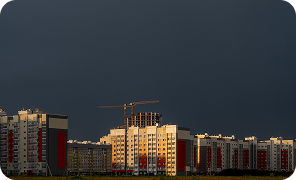
The U.S. and China the world’s two largest economies face diametrically opposite housing market challenges. The U.S. is constrained by a chronic shortage of homes, with a deficit exceeding 4.7 million units that is suppressing GDP, eroding personal income, and limiting labor mobility. In contrast, China is weighed down by excess supply, unfinished projects, and a liquidity-strapped developer sector that threatens financial stability. The U.S. housing shortage is no longer just a social issue it is a macroeconomic liability. A decade of post-GFC under-building collided with the millennial homeownership wave, leaving a shortfall of 4.7 million units. According to U.S. Chamber/REMI+ estimates, this translates into $1.2 trillion in lost annual GDP, $700 billion in foregone personal income, and 1.2 million unfilled jobs.
Structural barriers compound the problem: regulatory bottlenecks (restrictive zoning, long permitting timelines, ADU bans), rising construction costs (lumber/metal indices peaked in 2022 and remain elevated, and mortgage “lock-in” (80% of current owners hold rates under 5%). The result is a “frozen” resale market, where inventory is not scarce in absolute terms but misaligned in type, location, and price. Both markets share common threads: affordability stress, generational divides, and policy interventions that seek to balance demand with structurally constrained supply. For investors, these dynamics create a bifurcated opportunity set U.S. housing offers secular upside in construction innovation and policy reform, while China presents selective openings in distressed assets, urban renewal, and top-tier residential demand.
Share On




 info@rckanalytics.com
 +91 914 533 9262
 +91 (20) 46046669
 M 109 City Avenue, Shankar Kalat Nagar, Wakad, Pimpri-Chinchwad, Pune, Maharashtra, India - 411 057


Services
Sectors
Resources
Company