


Whitepaper
6 min Read
02 Nov, 2026
Share On


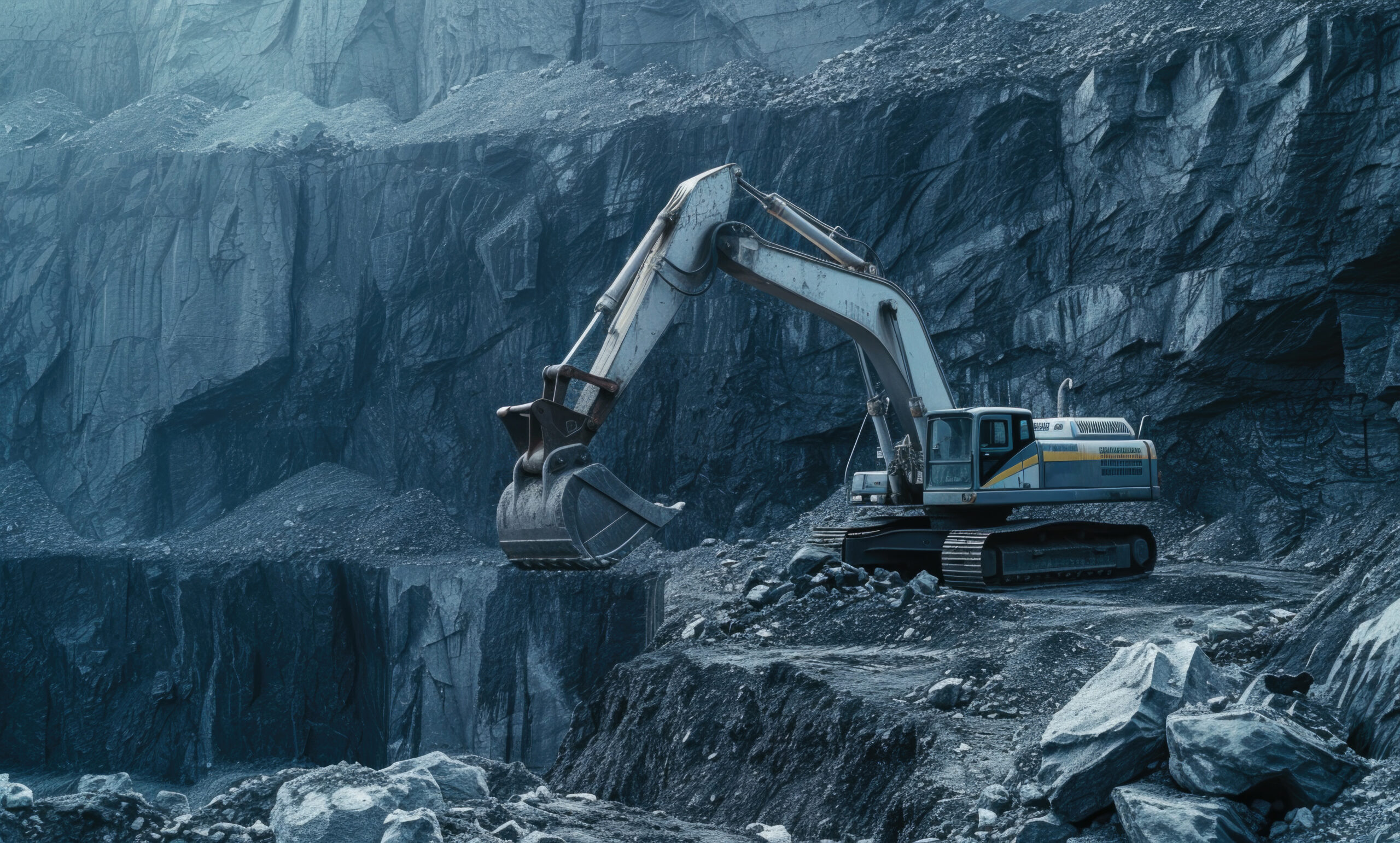
The mining M&A outlook for 2026 depends on one judgment: whether asset value now follows sovereign alignment more than cost position. This RCK Analytics weekly whitepaper examines the Commodities sector and mining industry, where announced deal value reached $79 billion in the first half of 2026 and a $12 billion state-backed stockpile is changing how buyers underwrite supply. Acquirers, sponsors and corporate strategy teams must decide where to deploy capital across producing mines, midstream refining and offtake structures. RCK Analytics’ earlier whitepaper on copper price rally and tariff stockpiling covered the price side. However, state backing can lift valuations only where assets are producing, financeable and tied to secured demand.
The mining M&A outlook points to a policy-protected growth asset class. Announced global mining deal value reached $79 billion in the first half of 2026, up 50% year over year, with megadeals above $1 billion contributing $56 billion. Brownfield assets lead because they offer producing cash flow, while Project Vault, a $12 billion state-backed stockpile, supports price floors and re-rating across miners, traders and manufacturers.
Gallium, germanium, lithium and silicon are redefining margins in semiconductors, defense and storage, with copper and lithium supply gaps projected into 2035. Value will increasingly follow sovereign alignment, midstream refining and secured offtake rather than cost position alone.
Announced global mining deal value reached $79 billion in the first half of 2026, up 50% from the first half of 2025. Deals above $1 billion contributed $56 billion, as acquirers preferred producing brownfield mines over greenfield development. Copper, energy transition assets and gold drew the strongest capital, supported by higher spot prices.
On a separate tracker, first-quarter 2026 mining M&A reached $21.6 billion across 121 deals, against $16.1 billion across 117 a year earlier, so value is rising faster than activity. Genesis Minerals’ $3.9 billion cash-and-stock takeover bid for Vault Minerals topped an earlier all-stock proposal from Regis Resources and extended consolidation into the third quarter.
Private capital is moving in parallel. A U.S.-backed consortium led by Orion Resource Partners signed a non-binding agreement in February to pursue a 40% stake in Glencore’s Mutanda and Kamoto copper-cobalt operations at an implied $9 billion combined enterprise value. Related analysis covers mega deals in H1 2026. Teams screening mining targets can use RCK Analytics’ investment banking team.
The full report details Wheaton Precious Metals’ $275 million upfront stream on the Jervois copper project.

Project Vault, launched in February 2026, is a $12 billion public-private stockpile anchored by a $10 billion federal loan alongside private capital. It acts as a financial shock absorber, purchasing supply, initially from global markets with domestic supply to follow, and holding inventory until manufacturers need it. Three trading houses have been appointed to procure supply, linking miners, traders and manufacturers.
The first mechanism is price-floor protection. Because the prices at which manufacturers buy from and resupply the Project Vault stockpile are designed to stay constant, it creates a demand signal that reduces volatility and improves project financeability. The second is valuation re-rating, since assets with access to vault allocations can be underwritten against a sovereign-supported demand backstop, which supports higher multiples than peers exposed to open-market volatility.
The structure also protects taxpayers, because returns are expected from loan interest and inventory turnover rather than subsidy. For investors in the Commodities sector, that shifts underwriting toward allocation access and offtake visibility.
The full report details how federal storage allocations make junior explorers prime acquisition targets.

Projected 2035 supply gaps remain 10% to 20% for copper and 30% to 40% for lithium, while nickel has moved toward balance. Greenfield copper development can take upwards of a decade, so buying existing mines is the fastest route for supply chains to secure volumes. Strategic minerals supply therefore sits at the center of acquisition strategy.
Gallium and germanium are semiconductor and defense chokepoints, recovered as trace byproducts of zinc and aluminum production with midstream refining concentrated in a single country. Lithium remains the energy storage standard, anchored by electrification targets, gigafactory buildouts and utility-scale storage despite spot price corrections from oversupply. Silicon is the foundational layer for AI and solar, where value accrues to domestic refining infrastructure rather than raw extraction.
As a result, margins diverge by exposure: gallium and germanium favor specialized Western processing hubs and defense suppliers, lithium favors direct mining joint ventures with long-term supply contracts, and silicon carries a valuation premium for refining capacity.
The full report covers how gallium enables nitride chips for 5G and 6G while germanium supports infrared optics and missile guidance.
The mining M&A outlook reflects a sector decoupling from the broader economic cycle and moving toward a policy-protected growth asset class, driven by defense demand, technology integration and state or regulatory backing. Dealmaking should follow three vectors: junior explorers holding federal storage allocations become premium targets for majors, midstream refining attracts private equity roll-ups, and downstream manufacturers take direct equity stakes in mines.
Midstream refining is the true bottleneck, so processing facilities, refining hubs and recycling nodes across lithium, silicon, gallium and germanium are natural roll-up candidates. Sponsors assessing these roll-ups can use RCK Analytics’ private equity and venture capital support team. Automakers, AI cloud providers and defense primes will pursue 10-to-15 year exclusive supply rights through joint ventures, bypassing public spot exchanges. Related analysis covers why strategic capital is rewiring industry.
Asset value will no longer rest on cost curve position alone but on alignment with defense frameworks and downstream technology supply chains. Investors may therefore prioritize brownfield mining assets, midstream refining capacity and offtake-linked structures where state backstops convert supply security into durable returns.
The full report covers how technology hardware margins separate companies with secured domestic sourcing from those exposed to export shocks.
With $79 billion of announced first-half 2026 deal value and a $12 billion state-backed vault, mining asset values will follow sovereign alignment, midstream refining and secured offtake rather than cost position alone.
Project Vault is a $12 billion public-private mineral reserve anchored by a direct loan of up to $10 billion, which the Export-Import Bank of the United States approved in February 2026, according to EXIM. The reserve holds inventory between producers and manufacturers. Its aim is to shield U.S. industry from supply shocks.
Genesis Minerals launched its $3.9 billion takeover bid for Vault Minerals on July 6, 2026, according to Reuters. The cash-and-stock bid topped an earlier all-stock proposal from Regis Resources. As a result, consolidation among mid-tier gold producers extended into the third quarter.
A U.S.-backed consortium led by Orion Resource Partners, which includes the U.S. Development Finance Corporation, signed a non-binding agreement in February 2026 to pursue a 40% stake, according to Glencore. The $9 billion figure is the implied combined enterprise value of the two assets, not the price of that stake.
Announced global mining deal value reached $79 billion in H1 2026, up 50% from H1 2025, according to GlobalData. Megadeals above $1 billion contributed $56 billion of that total.
Download the full report to see the gallium and germanium end-use analysis, and the technology hardware margin split.
Share On



 info@rckanalytics.com
 +91 914 533 9262
 +91 (20) 46046669
 M 109 City Avenue, Shankar Kalat Nagar, Wakad, Pimpri-Chinchwad, Pune, Maharashtra, India - 411 057


Services
Sectors
Resources
Company
Copyright © 2026. RCK Analytics - All Rights Reserved.